
Ernest Obu-Cann: Virtual Reality
Virtual Reality (VR) is a technology that creates immersive, computer-generated environments that users can explore and interact with. It aims to replicate sensory experiences, such as sight, sound, and touch, to create a feeling of presence in a virtual world.
By wearing special headsets or helmets, users are transported to virtual worlds, feeling as if they are truly present within them. VR has the potential to revolutionize various fields, from entertainment and gaming to education, training, and even healthcare.
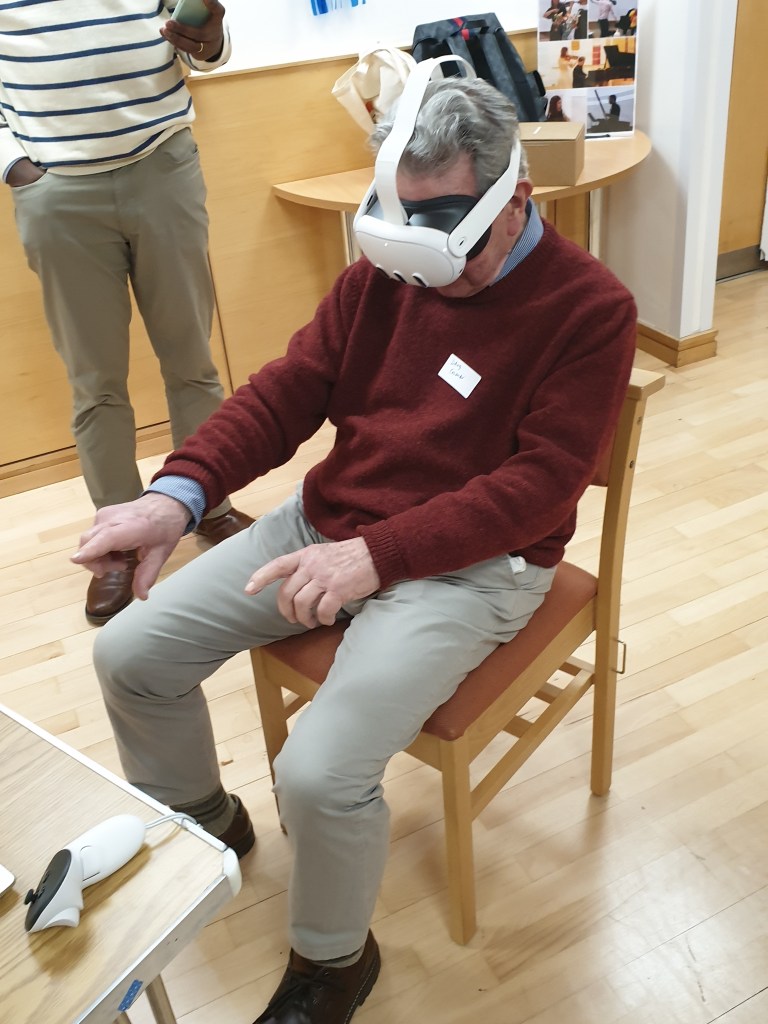
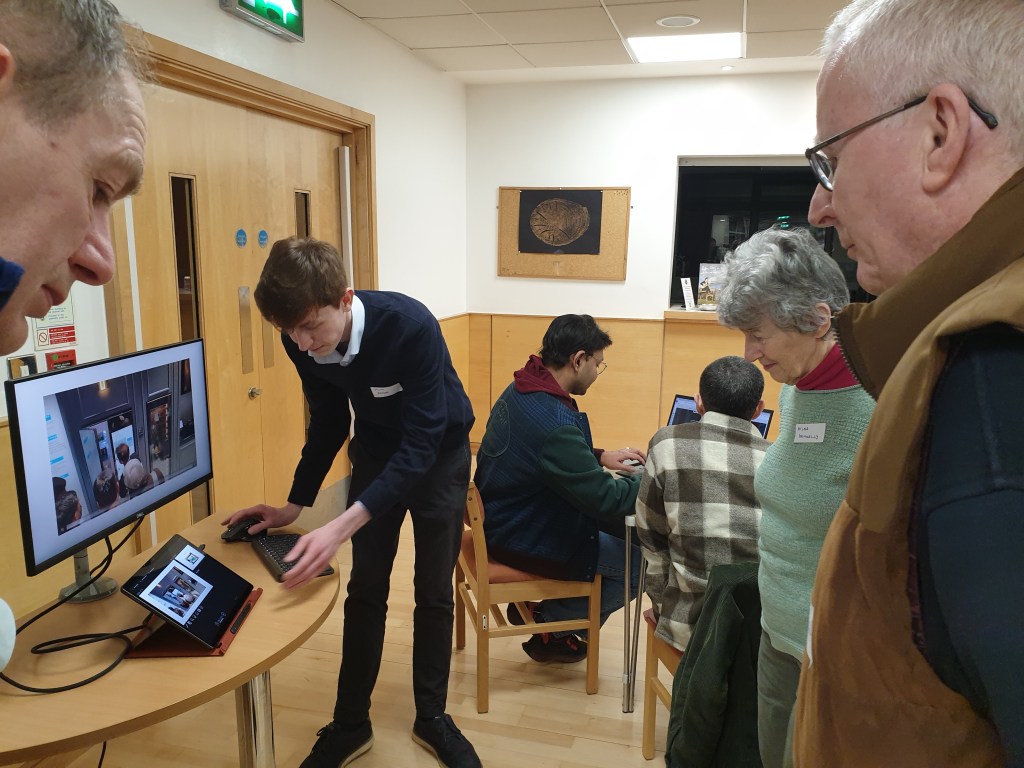
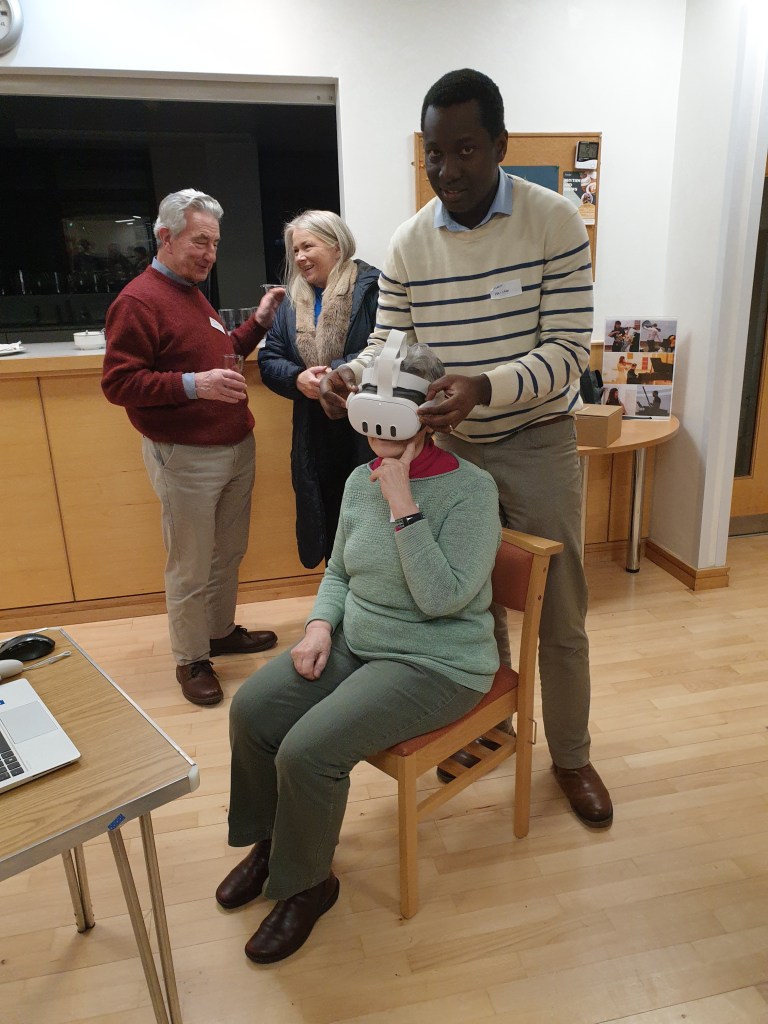
At our AI Workshop in February, we delved into the realms of immersive technology by experimenting with the Meta Quest 3 Oculus headset. This cutting-edge device provided an unparalleled opportunity to augment user experiences, elevating them to new levels of immersion and engagement. Through the Meta Quest 3 Oculus, participants were able to explore dynamic virtual environments and interact with content in ways previously unimaginable, showcasing the transformative potential of VR technology in enriching learning and training experiences. The hands-on exploration of the Meta Quest 3 allowed us to gain firsthand experience with the potential of VR in various applications.
Expanding on the versatility of VR beyond its educational applications, this technology presents a myriad of valuable functionalities across diverse sectors. In the realm of healthcare, VR simulations prove invaluable, aiding not only in surgical training but also in patient therapy and the management of pain. Similarly, within architecture and design, VR serves as a powerful tool, allowing architects and clients alike to immerse themselves in realistic renderings of architectural concepts, facilitating a deeper understanding before any physical construction takes place.
Moreover, the transformative potential of VR extends into entertainment, gaming, tourism, and remote collaboration, opening up new horizons for creativity, exploration, and communication. In entertainment and gaming, VR transports users into immersive worlds, providing experiences that transcend traditional forms of media. In the tourism industry, VR offers virtual tours and experiences, allowing individuals to explore destinations from the comfort of their homes. Additionally, VR facilitates remote collaboration by enabling users to interact within shared virtual spaces, overcoming geographical barriers and enhancing teamwork and communication.
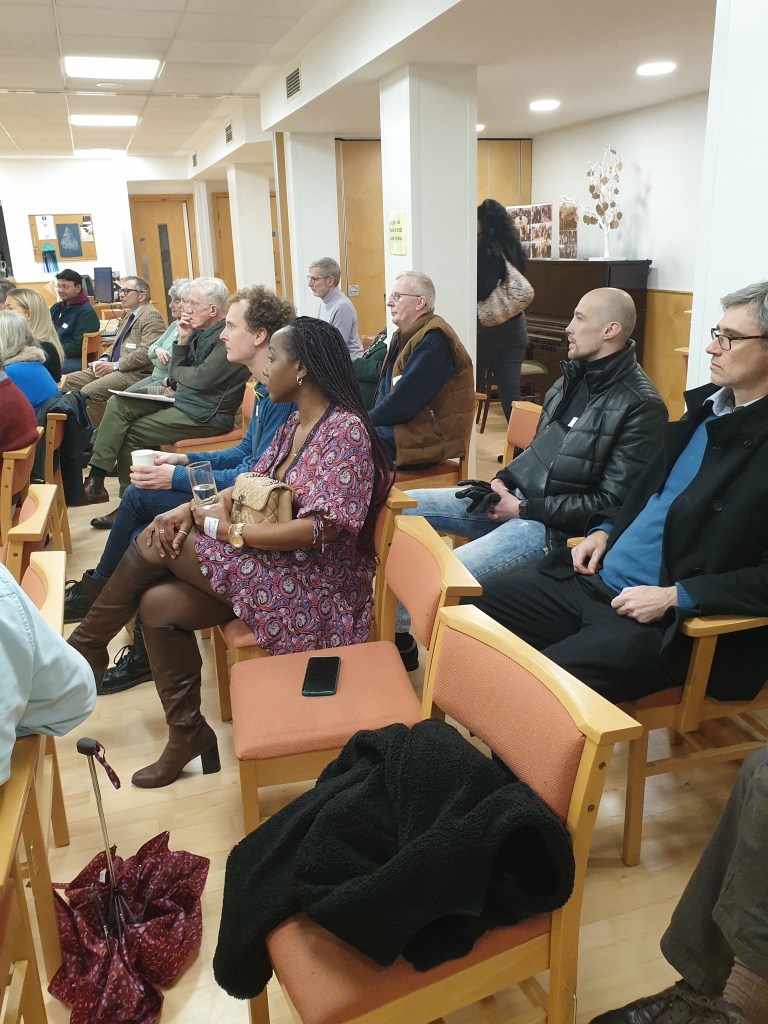
Participants of the AI Workshop expressed a blend of enthusiasm and inquisitiveness regarding the vast potential of VR technology. Many were particularly struck by its immersive features and could foresee its transformative role in educational and training settings. Curiosity was piqued with inquiries surrounding the accessibility of VR tools, apprehensions about motion-induced discomfort, and the scalability of VR applications across diverse devices and platforms. This collective feedback underscored a palpable eagerness to delve deeper into the convergence of AI and VR, with the aim of unearthing groundbreaking solutions and immersive experiences.
Callum Barker: “Smart” technology
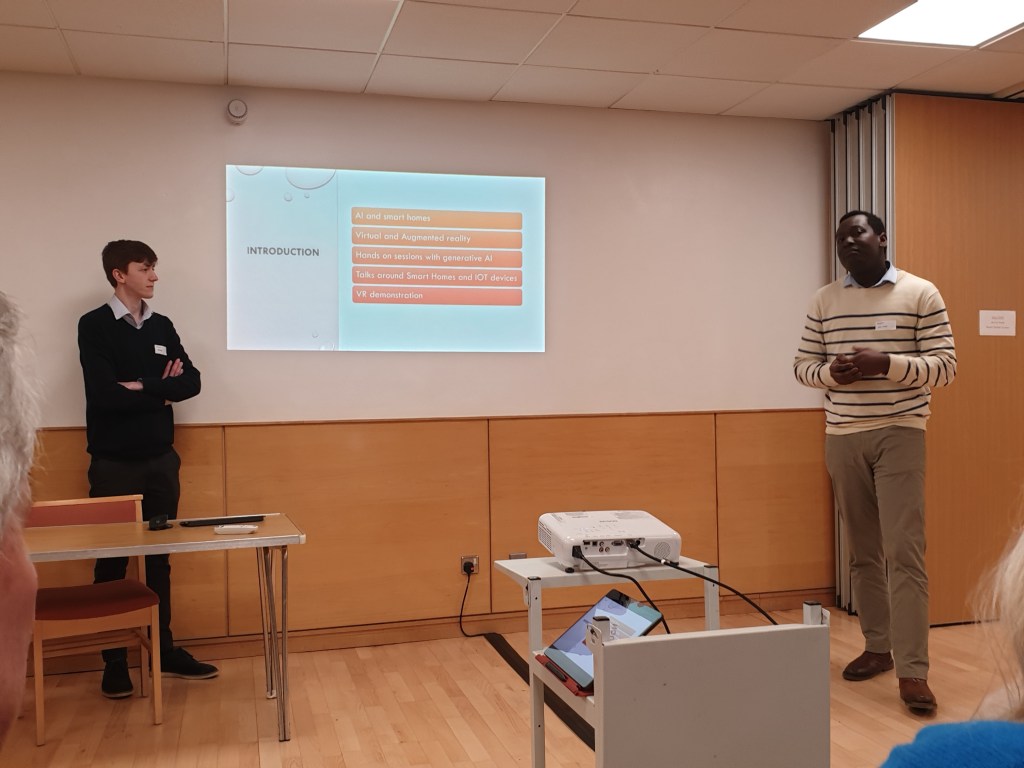
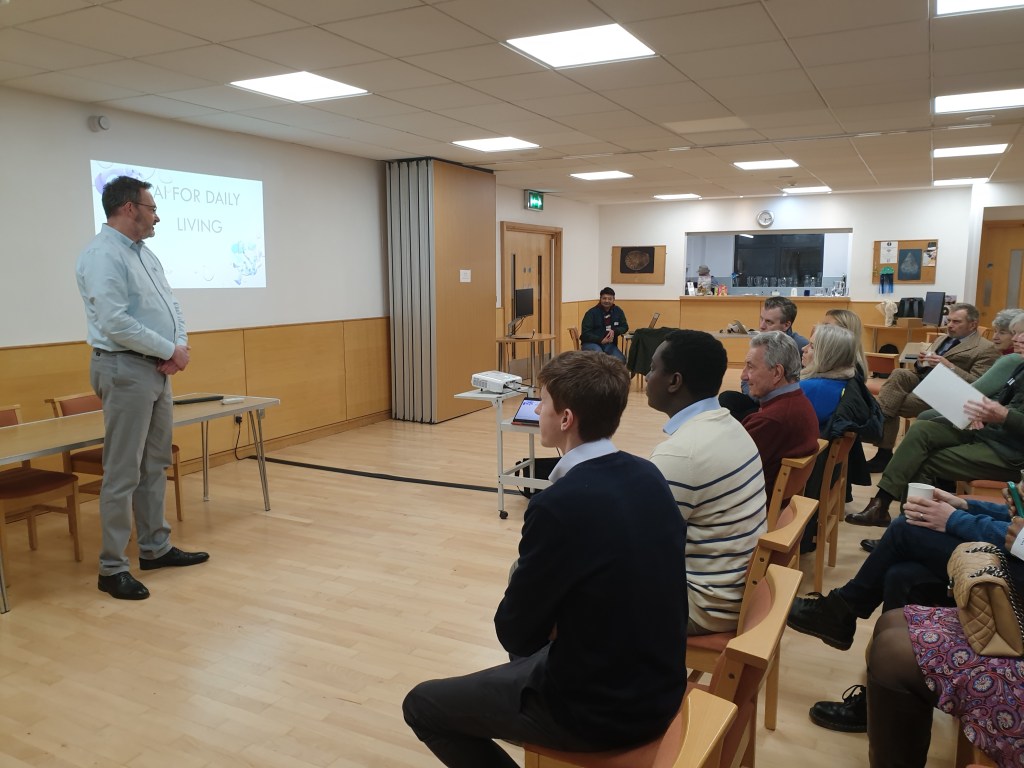
MSS Presented at the AI Study Group’s workshop, I introduced the guests to several “Smart” technologies that can be implemented into their homes. These technologies included Smart Home Appliances such as fridges, washing machines & robot vacuums and Smart Devices such as their Watch, Phones & IOT Sensors. We explored how these technologies will be able to interact with one another and how the use of AI will bring the next level of confort and convinience within the Home. Using data from these various sources, Smart Homes will be able to automatically control the heating, lighting, security and appliances. Examples: – If you leave your home at 8AM everyday, the Smart Homes will know to turn down the heating, turn off the lights, set the vaccum cleaners off. – Temperature and heating can be more efficient by heating only the rooms you usually go in. – If you are running low on milk or eggs, you can receive an alert or automatically place an order. These technologies can be particularly useful for people with accessibility needs or the elderly. Increasing their safety and their autonomy. We also prensented way in which AI is already a big part of our lives, via Agriculture, Cyber Security, Content Platform and Advertising. A big concern for most people was privacy. Installing Smart Devices anmd Appliances within our homes that collect and analyse our data by nature is a big barrier when it comes to the adoption of these technologies and certainly puts people off when it comes to purchasing these devices. Another reason is the need for such technology, with most people being used to their fridge or washing machine not having an app to turn it on. Only time will tell if the desire for Smart Appliances and Devices will grow.
Guy Marshall – Generative AI for images
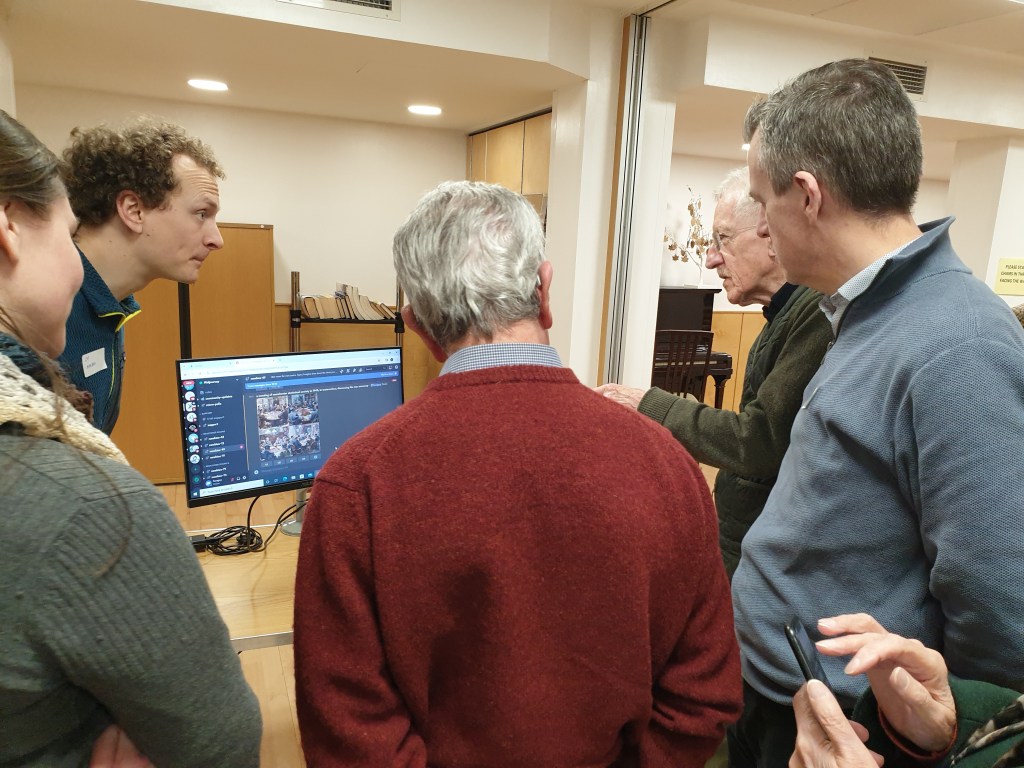
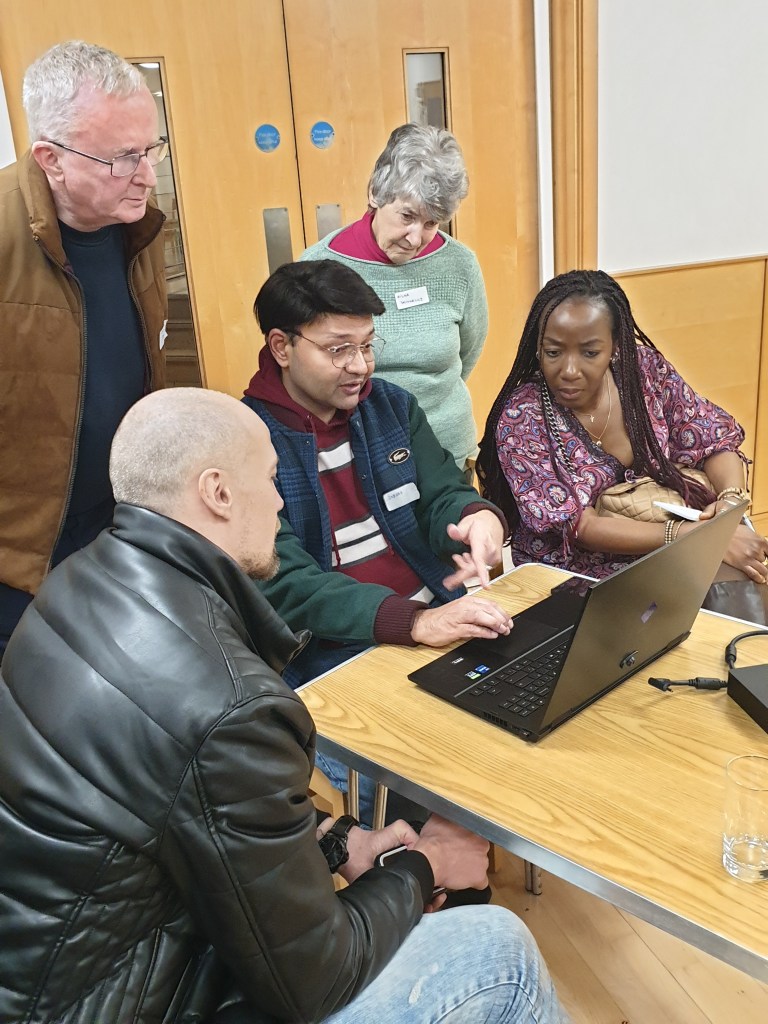
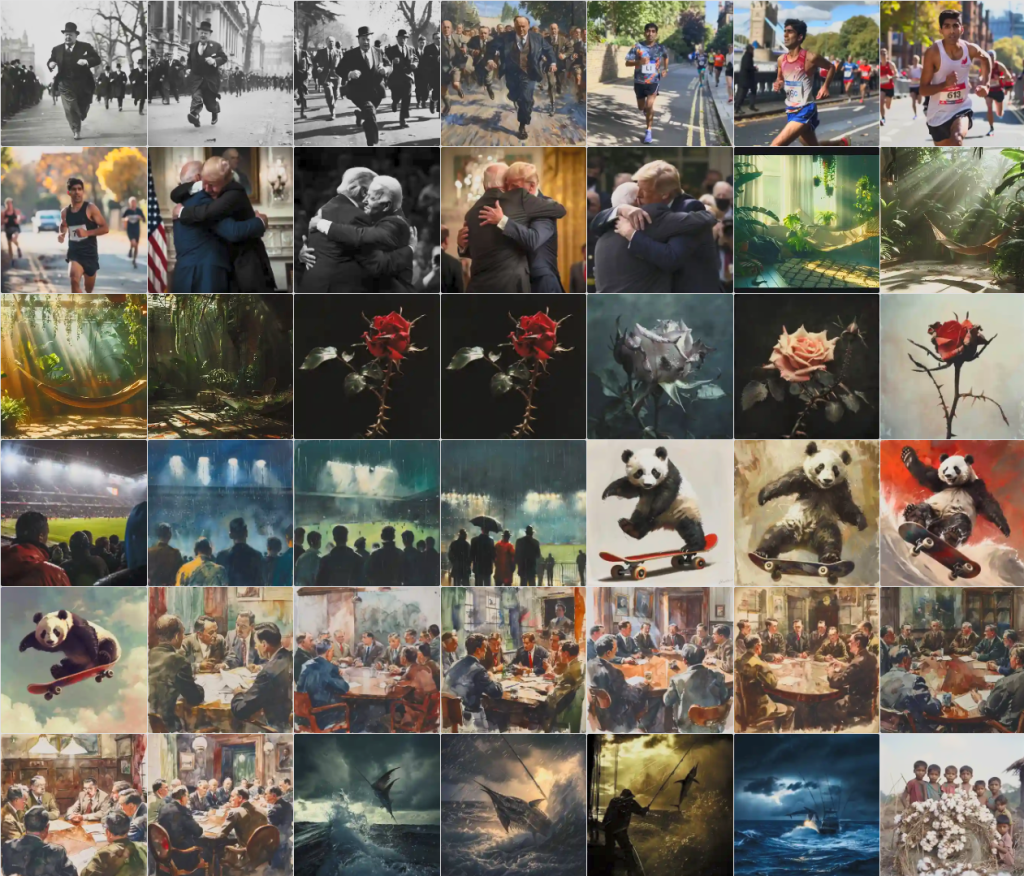
Midjourney is an AI image generation tool. We demonstrated this as part of the workshop. With a text input, the system generates four images. One can put very precise prompts in, like the lighting settings or camera model. You can also adapt existing images to the style of various artists. Some images from the workshop are below. You can imagine the prompts!
I was impressed at how easily Members got into the spirit of playing with this. There was a tendency to try to create a specific mental image, and I think the skills of a “prompt engineer” became understood as an emerging need. I think people were impressed at the high resolution of the images more than anything!
 Manchester Statistical Society