
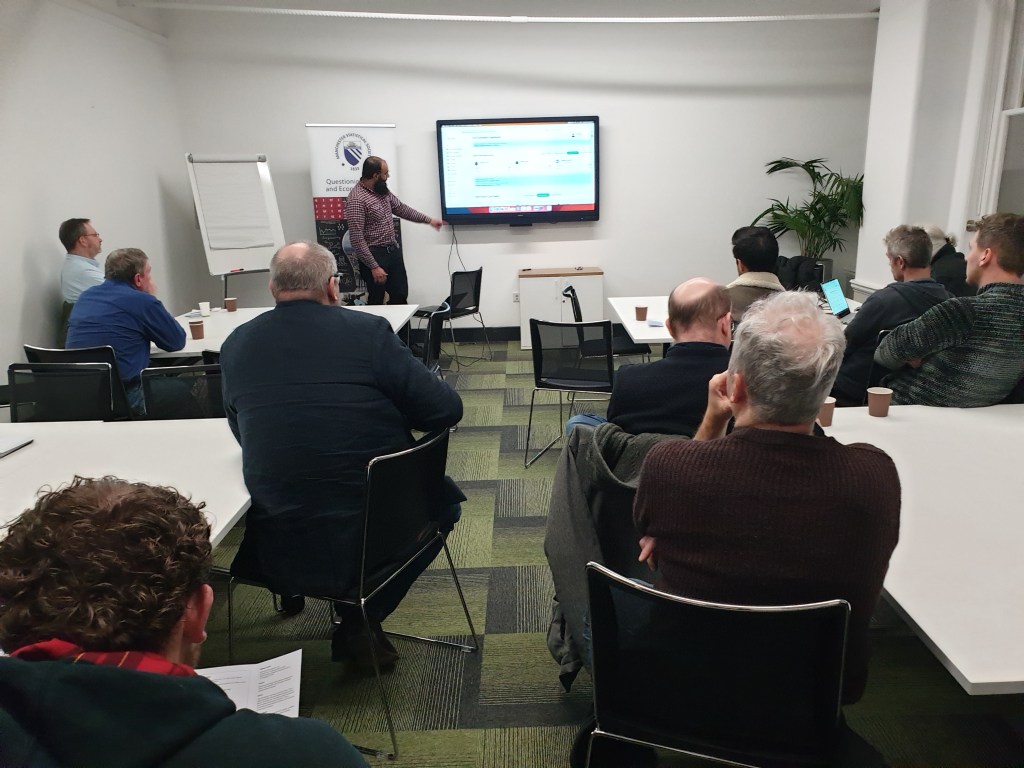
On February 18th, MSS AI Study Group hosted Ghulam Jilani, CEO of Tiksom Limited, who helps companies unlock the potential of AI.
Ghulam, in his talk titled “AI-Powered Business Growth: A Cross-Industry Revolution”, explored the transformative impact of AI across various sectors.
AI in Key Industries:
- Education: AI enables personalised learning experiences, 24/7 virtual tutoring, and can predict student performance, improving outcomes.
- Healthcare: AI aids in earlier and more accurate disease detection, predicts patient risks, accelerates drug discovery, and supports mental health.
- eCommerce: AI drives personalised shopping, smart inventory management, chatbots for customer service, and content generation. Example: Amazon’s AI recommendations contribute 35% of its revenue.
- Fintech: AI enhances fraud detection, credit scoring, automated trading, and customer service in banking, exemplified by JPMorgan Chase’s use of AI to process contracts quickly. Business Impact of AI: AI adoption has increased significantly, with 35% of businesses using AI and 60% planning to do so. Companies benefit from reduced operational costs (30% on average) and enhanced customer engagement (50% increase). Many businesses believe AI will offer a competitive advantage in the coming decade.
AI Business Growth Strategies:
- eCommerce: Strategies such as offering discounts on tech bundles and recovering dead stock with targeted discounts show potential for increased sales and revenue.
- Education: Forecasted growth suggests expanding marketing efforts, course offerings, and instructor hiring to meet demand. AI-driven recommendations also focus on optimizing pricing, improving coupon strategies, and reducing refund rates.
- Healthcare: AI is used to optimize staffing, reduce costs, and improve patient care with predictive analytics. Hospitals utilising AI experience improved performance metrics like reduced wait times and enhanced patient satisfaction.
Key Takeaways:
AI is revolutionising industries by enhancing operational efficiency, driving sales, improving customer satisfaction, and supporting smarter decision-making. Its strategic implementation is crucial for businesses aiming to maintain a competitive edge in a rapidly evolving market.




 Manchester Statistical Society