
Summary of “Generative AI: A Tale of Two Case Studies” by Farooq Ansari
Farooq Ansari’s talk explores practical insights and key learnings from two real-world generative AI projects, examining both the promise and pitfalls of implementing generative AI in business contexts. It presents a structured, experience-based guide to navigating the fast-evolving generative AI landscape.
The State of the Market
The generative AI market has exploded, with global spending surpassing $25 billion in 2024 and projected to reach approximately $650 billion by 2025. Despite this growth, a substantial number of projects (30%+ at PoC stage, and 70–85% overall) fail to deliver meaningful ROI. This discrepancy underscores the need for clear strategy and execution when adopting AI.
Approaching Generative AI Projects
Ansari outlines a structured project approach:
- Explore + Identify: Begin by clarifying business needs, aligning data infrastructure, and selecting realistic use cases.
- Experiment + Prototype: Create functional prototypes using well-prepared data and robust cloud frameworks.
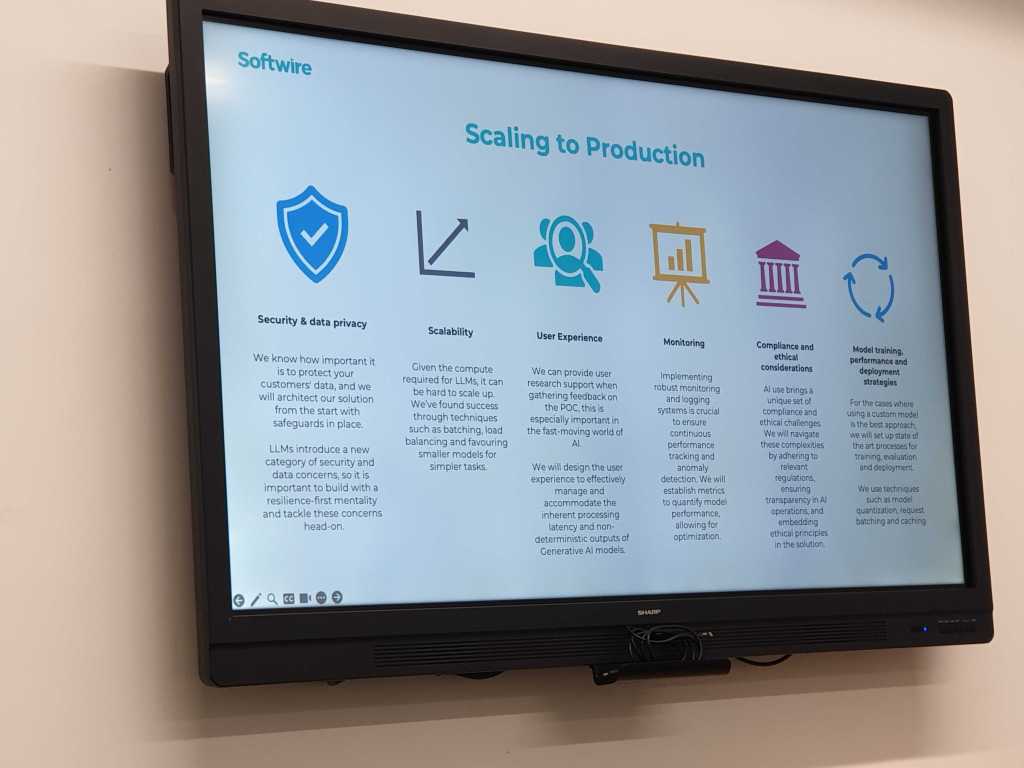
- Scale to Production: Address challenges such as:
- Security & Privacy: Design systems with data protection and resilience in mind.
- Scalability: Use load balancing, batching, and smaller models to manage computational intensity.
- UX: Tailor interfaces to handle latency and unpredictability, while emphasizing user research.
- Monitoring: Integrate metrics, logging, and anomaly detection for continuous evaluation.
- Compliance & Ethics: Ensure transparency, fairness, and alignment with regulations.
- Model Management: Deploy advanced techniques like quantization, caching, and fine-tuning where necessary.
Case Study 1: Tax Systems
This project involved building a system to map and assess business expenses for tax deductibility. It emphasized careful prompt engineering and contextual awareness to ensure accuracy. UX included a “confidence score” to boost user trust.
Outcomes:
- Achieved 93% accuracy (target was 85%)
- Reduced processing time from days to ~20 minutes
- Freed staff for higher-value work
- Enabled a customer-facing deployment with confidence
- Delivered up to 20x productivity gains
Case Study 2: AutogenAI – Bid Writing
The goal was to accelerate and improve the quality of bid and proposal writing. Key strategies included rapid ideation, close collaboration between design and technical teams, and fast feedback loops.
Learnings:
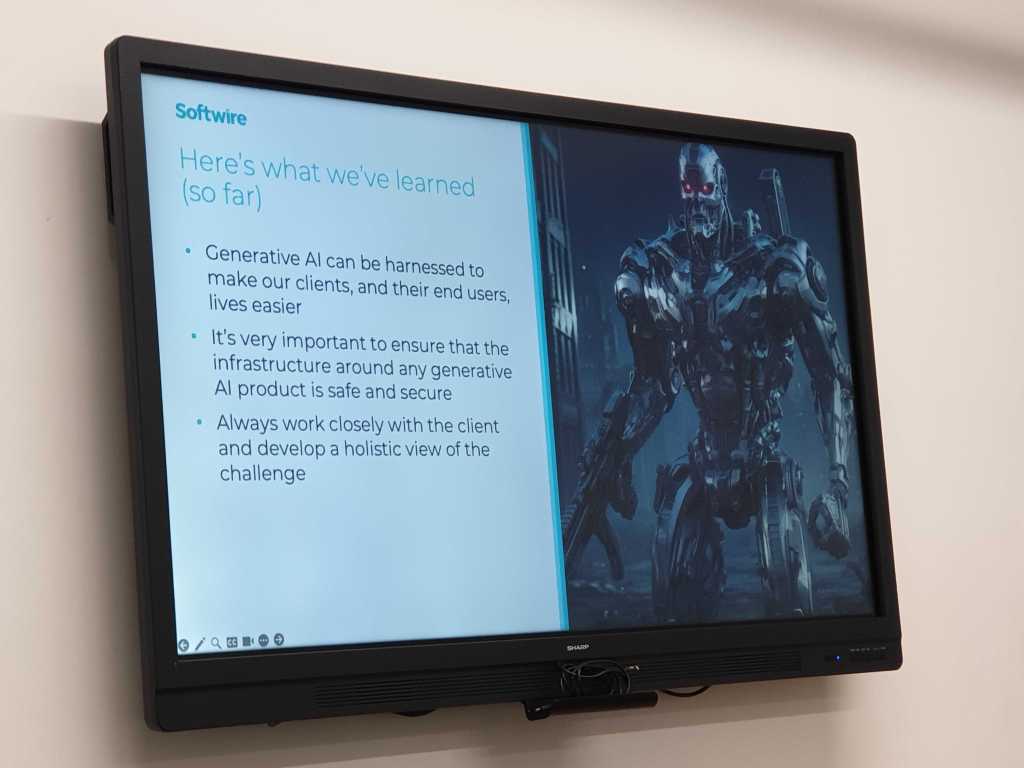
- Generative AI significantly improves user productivity
- Strong infrastructure, continuous learning, and cross-functional collaboration are essential
- The technology landscape changes rapidly, requiring ongoing adaptation
Philosophy and Key Principles
Ansari shared foundational principles for developing effective generative AI solutions:
- Analytics First: Track performance to inform A/B testing and model optimization
- Scalable Performance: Handle API limitations and costs with retries, batching, and observability
- Least Use Principle: Apply AI only where it adds clear value, combining with traditional methods when more effective
Technical and Strategic Techniques
- Prompt Engineering: Use RAG, chaining, and reasoning prompts
- Fine Tuning: Employ domain-specific model adjustments (e.g., LoRAs)
- Model Strategies: Blend multiple models or use adversarial training
- Safety Measures: Guard against prompt injection and hallucinations with verification systems
- Co-pilot Patterns: Balance automation with meaningful human input
Conclusion
Generative AI offers enormous potential, but success requires more than just technology. Deep discovery, rapid prototyping, feedback loops, secure infrastructure, and ethical design are all critical. Ansari’s talk encourages practitioners to combine strategic foresight with practical execution to unlock sustainable AI value.


 Manchester Statistical Society