
From Hype to Help & Everything In Between: Embedding AI into Real World Work- Place Benefit, by Robert Fawcett – Executive Technology Leader | Human CTO | Strategic Transformation Partner
Summary
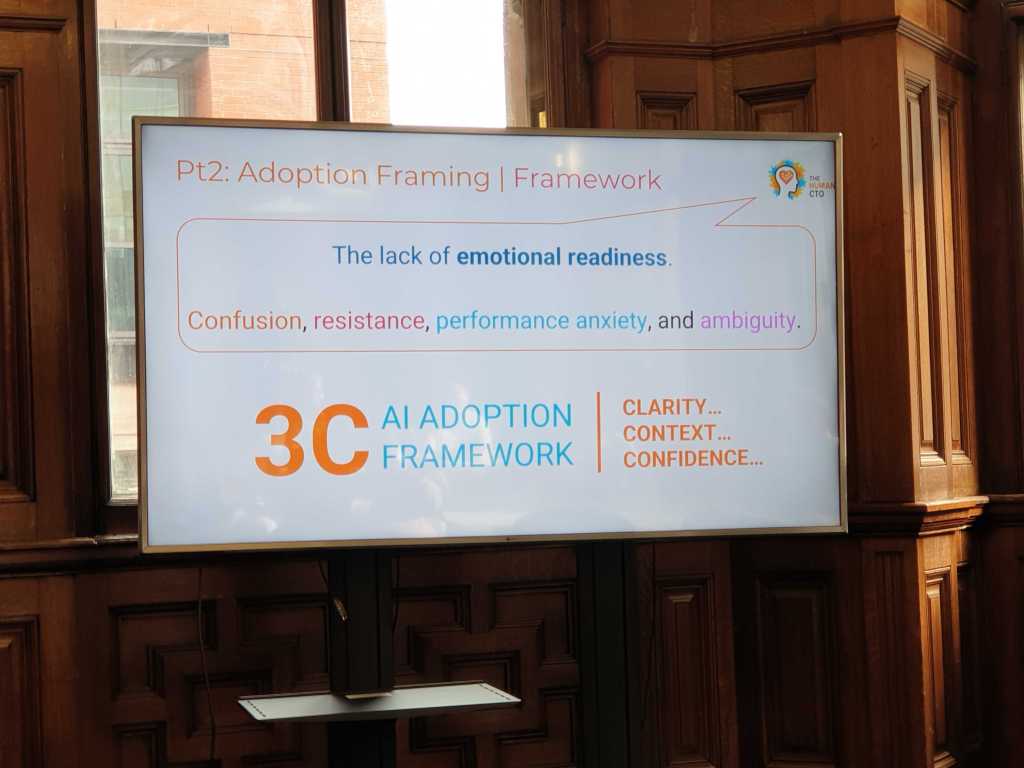
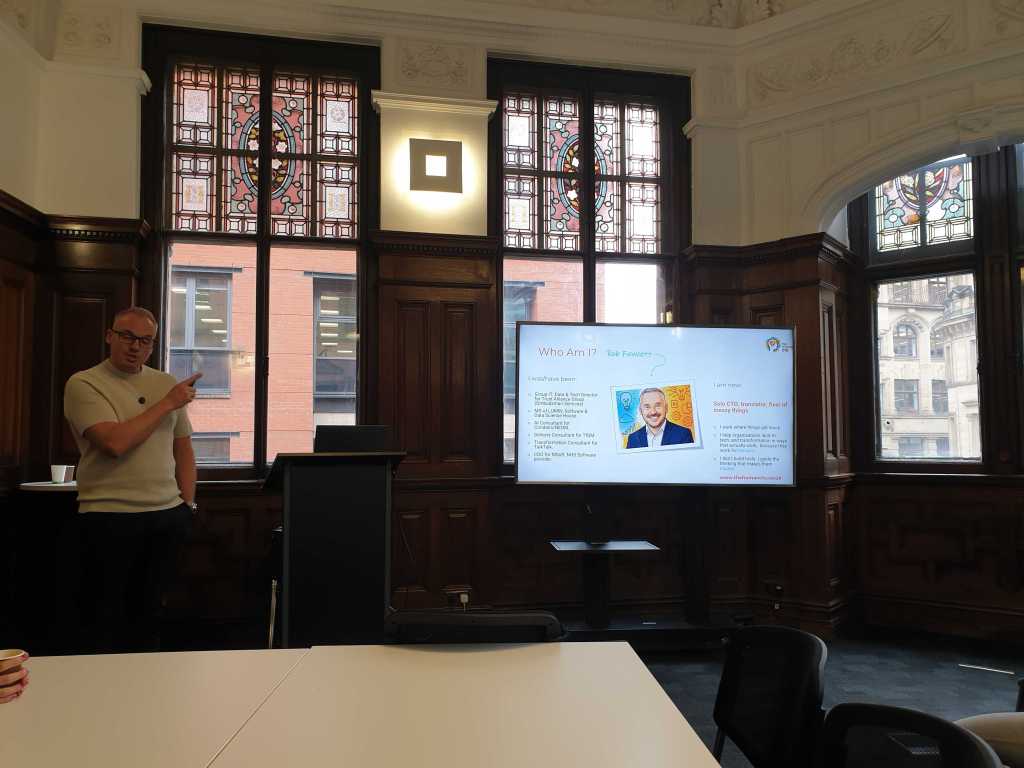
This talk addresses the real-world challenges of AI adoption in workplaces, arguing that AI often fails not because of poor technology, but due to human resistance and lack of trust. The presenter, an experienced CTO and transformation consultant, draws on a range of industry experience to emphasise that the true obstacle to successful AI implementation is emotional readiness, not technical ability.
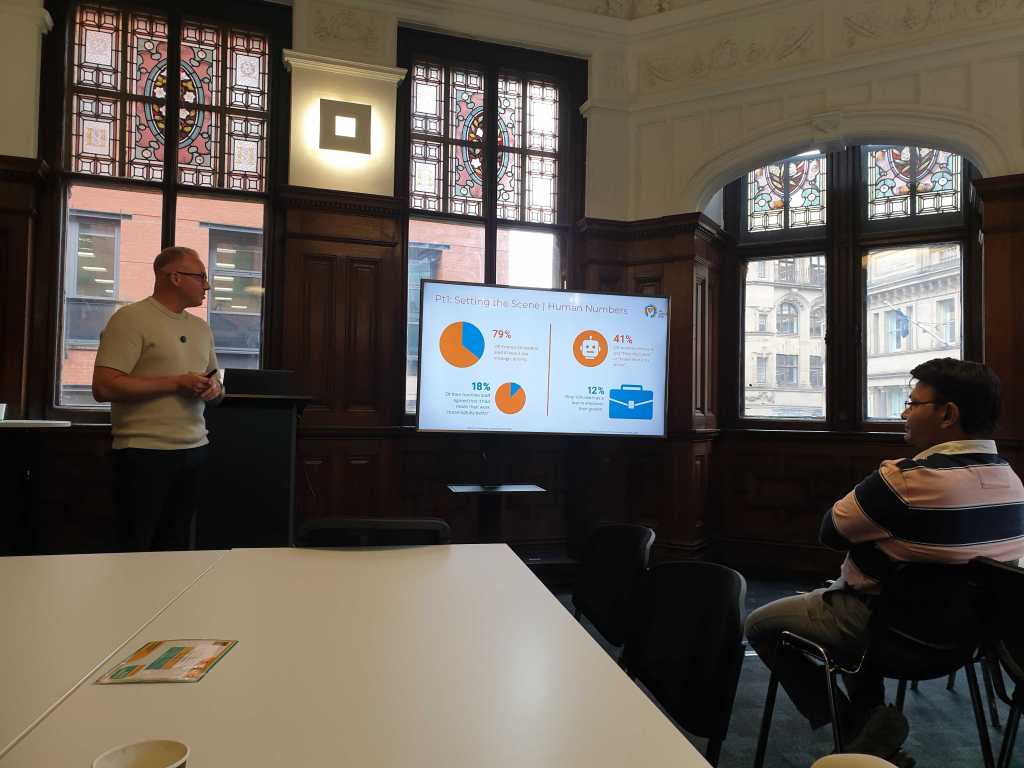
Setting the Scene, the talk reveals a significant disconnect between AI hype and its real impact on employees. While 79% of UK enterprise leaders prioritise AI, only 18% of frontline workers feel it improves their jobs, and 41% fear it may worsen or eliminate their roles. This misalignment, termed “the gap” is the chasm between technological potential and human acceptance. Despite soaring global AI investment, only 25% of organisations achieve meaningful business outcomes, highlighting the need to focus on human purpose and adoption.
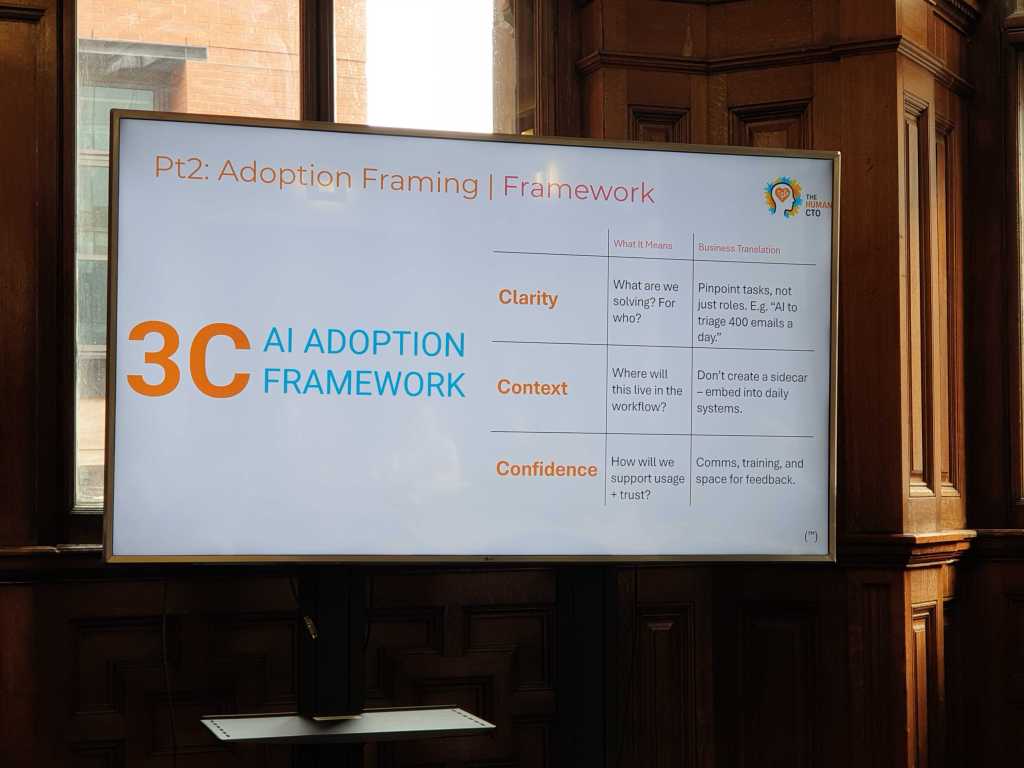
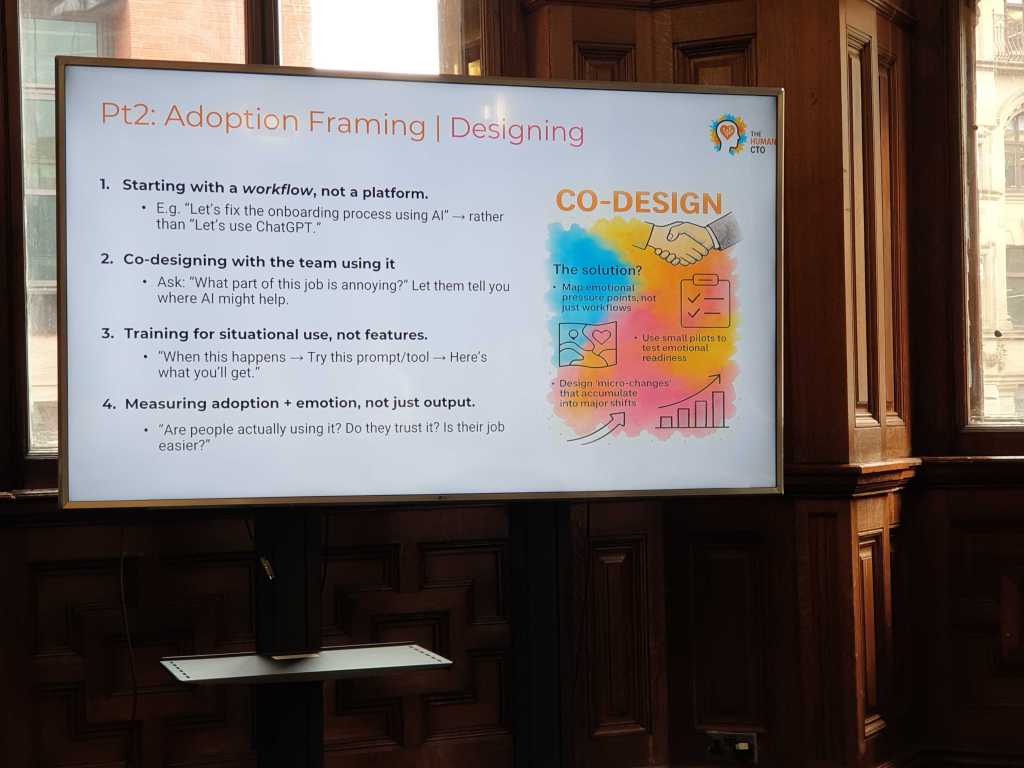
Adoption Framing That Actually Works focuses on rethinking AI deployment. Too often, companies focus solely on technical rollouts, neglecting the people who must use the tools. Successful adoption hinges on designing AI for people, not just processes. The speaker recommends five key questions before implementing AI, challenging organisations to assess who benefits, where inefficiencies lie, and what skills are required. A “3C Framework” — Clarity, Context, Confidence — underpins this approach. Practical tips include designing around workflows, involving staff in solution creation, providing situational training, and measuring emotional as well as operational outcomes. Tools like the “Fear Map” are used to surface anxieties and hopes before rollout.
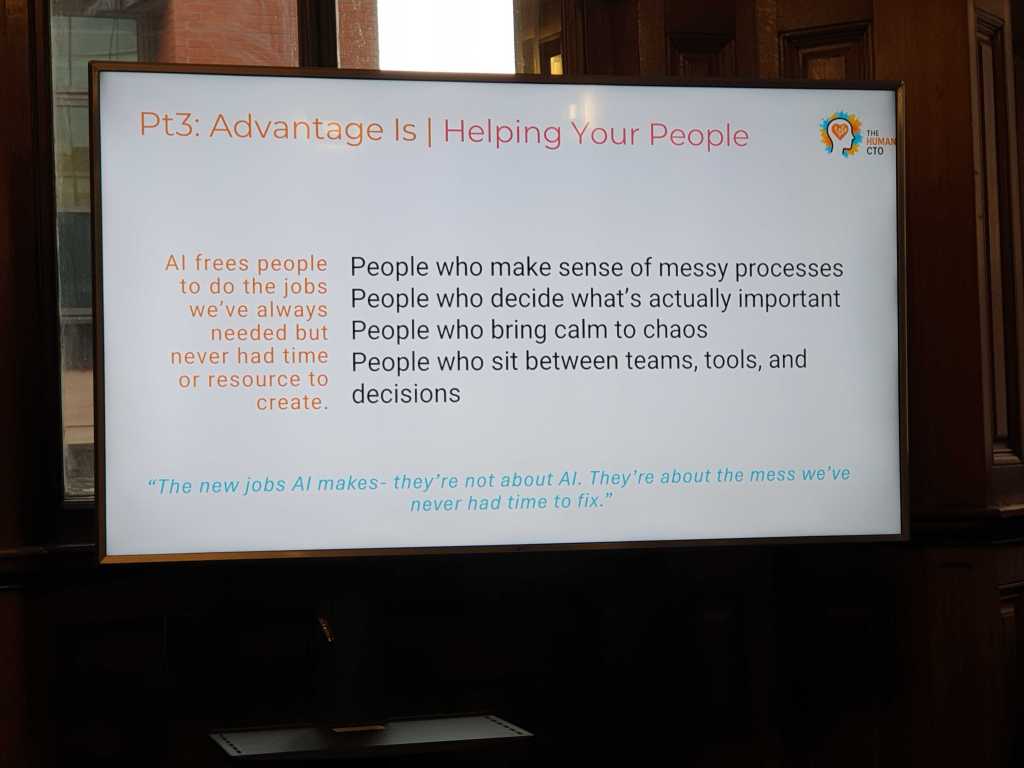
The Advantage is Not AI, It’s People, the talk stresses that AI success depends on simplicity, meaningful adoption loops, and reinforcing confidence rather than compliance. AI should enhance good processes and reveal weaknesses in poor ones. Importantly, AI is portrayed not as a replacement for people but as an enabler, freeing staff to perform valuable tasks previously overlooked. Roles that bridge chaos, make sense of complexity, and connect teams are highlighted as the true human advantage in the AI era.
The overarching message is clear: technology must serve people, and the only lasting competitive advantage for any organisation remains its people — empowered, trusted, and enabled by AI.


 Manchester Statistical Society