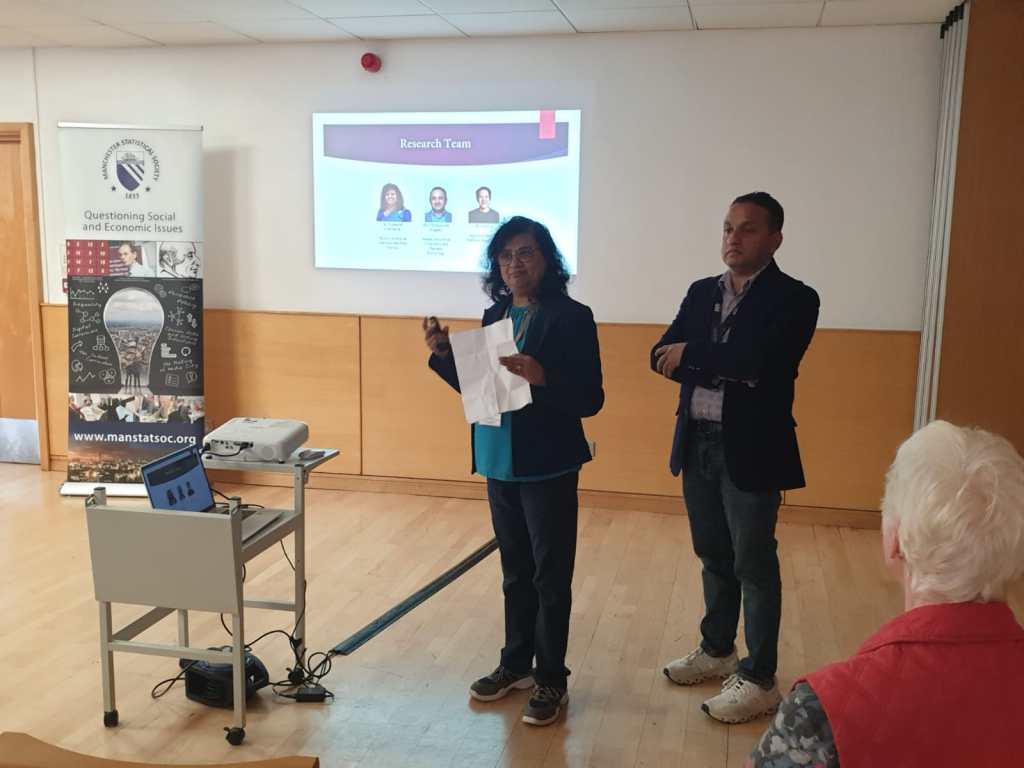
Dr. Nishanthi Abeynayae, Senior Lecturer in Statistics and Data Science, Mr. Chiranjeewa Atapattu, Senior Lecturer in Hospitality and Business Technology, and Dr. Xia Cui, Senior Lecturer in Software Engineering, presented results of their research, supported by Sir Harry Campion’s Fund.
Summary of the Paper:
“Machine Learning-Driven Analysis of Urban Hotel Performance: A Comparative Study of Manchester and European Benchmarks”
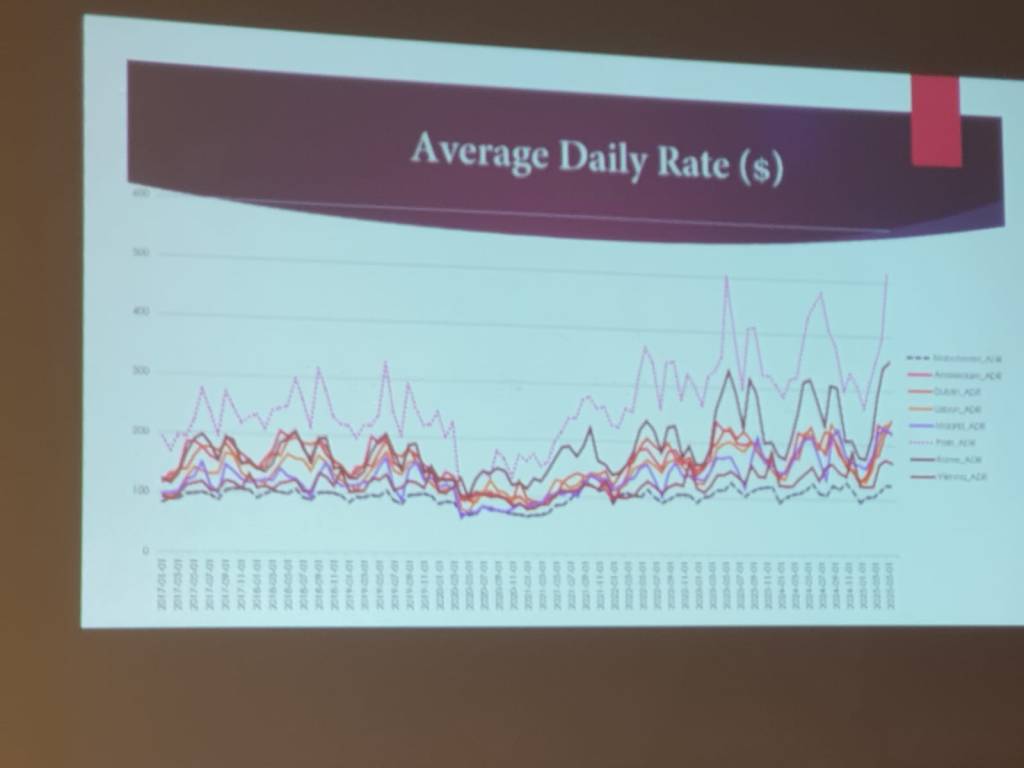
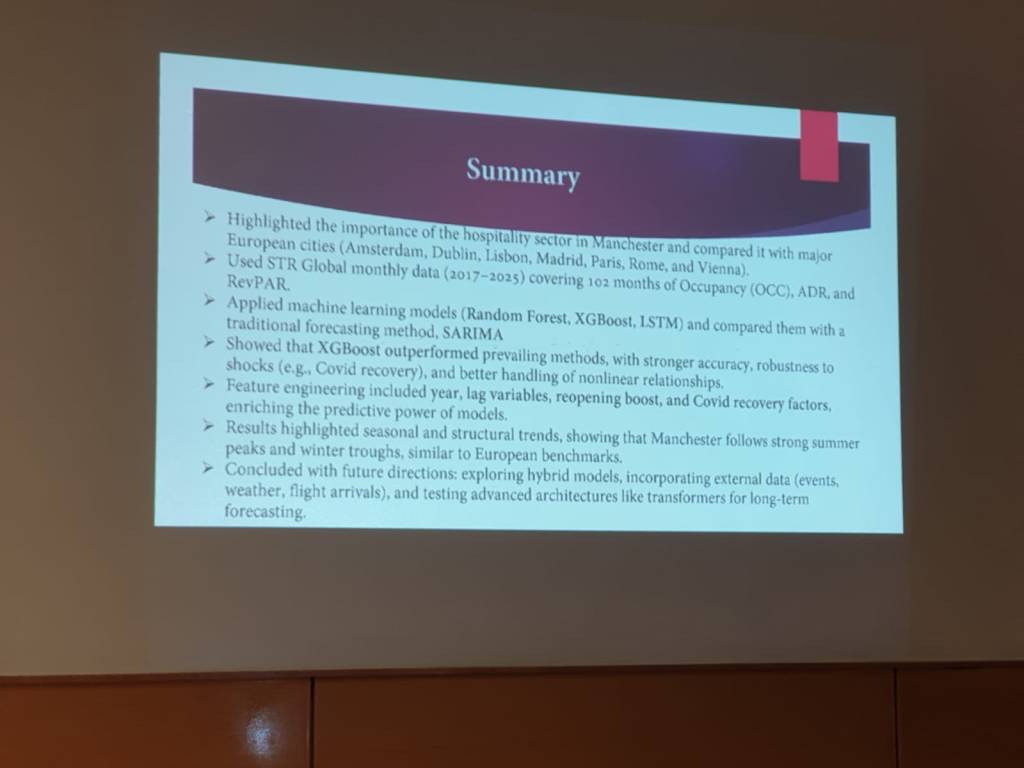
This study investigates the performance of Manchester’s urban hotel sector using machine learning techniques, benchmarking it against major European cities—Amsterdam, Dublin, Lisbon, Madrid, Paris, Rome, and Vienna. It aims to create robust forecasting models for key hotel performance indicators (KPIs) and offer strategic insights into enhancing Manchester’s hospitality competitiveness.
Manchester has experienced significant hospitality growth, with a 10% increase in overnight visitors between 2017 and 2019, reaching 2.94 million. The sector’s resilience post-COVID is notable, with a £1.4 billion recovery in tourism activity. However, challenges persist, including fluctuating demand, rising competition, and diverse guest expectations. Manchester’s 2019 hotel occupancy stood at 78%, above the UK average of 76%.
The study uses STR Global data from January 2017 to June 2025, analysing 102 months of monthly hotel KPIs: Occupancy (OCC), Average Daily Rate (ADR), and Revenue per Available Room (RevPAR). These KPIs are vital for decision-making in pricing, resource allocation, and revenue management. Manchester’s hotel market is dominated by Upper Midscale and Economy class properties, which account for 76% of the market but only 65% of the total room supply.
The selected European cities serve as comparative benchmarks due to their geographic and cultural diversity, data availability, established tourism appeal, and event-driven demand patterns. Each city, including Manchester, offers unique strengths—ranging from sport tourism, music events and business (Manchester) to cultural and religious attractions (Rome, Vienna, Paris).
Four forecasting models are used: SARIMA, Random Forest, XGBoost, and LSTM, with XGBoost emerging as the most effective due to its high predictive accuracy, resistance to overfitting, speed, and ability to identify important influencing factors.
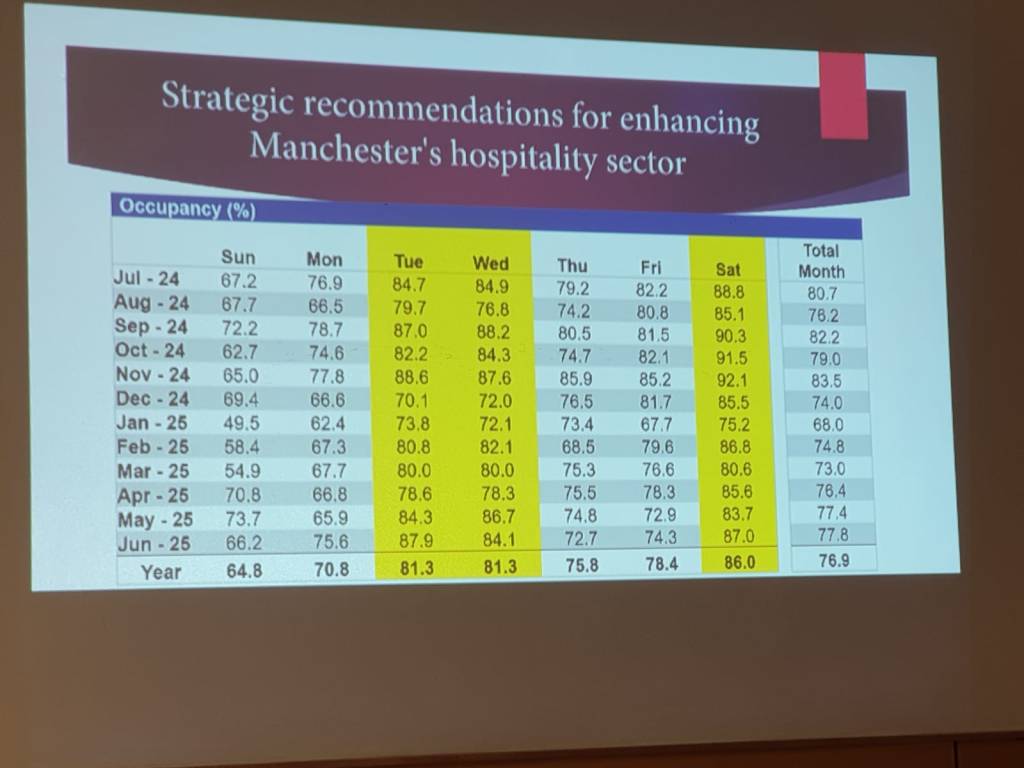
The analysis provides insights into Manchester’s seasonal occupancy trends, supply-demand imbalances, and the city’s competitive stance within Europe.
Strategic recommendations include:
- Strengthening the dual appeal to business and leisure travelers through targeted promotions (e.g., Sunday-Monday staycations, “bleisure” bundles, remote work packages).
- Leveraging event-driven tourism by integrating hotel offers with football matches, concerts, and festivals; forming partnerships with event organisers; and boosting international sports tourism marketing.
Ultimately, this research provides a data-driven framework to forecast hotel performance, guide investment, and shape tourism strategies. It demonstrates the value of machine learning in enhancing operational planning and policy-making in the urban hospitality sector, with Manchester serving as both a case study and model for broader applications.


 Manchester Statistical Society